Airflow Coverage and Zoned Operation of Large Industrial Ceiling Fans in Logistics Warehouses
2026-11-10
Airflow Coverage and Zoned Operation of Large Industrial Ceiling Fans in Logistics Warehouses
Logistics warehouses are typically characterized by high ceilings and densely arranged racking. Poor air circulation between aisles and storage racks easily creates localized hot and stagnant zones. Large industrial ceiling fans operate at low speeds with large-diameter blades to drive continuous air circulation throughout the space. They effectively reduce vertical temperature differences and eliminate stagnant air. Compared with multiple small fans, large industrial ceiling fans excel at wide-area airflow coverage, making them ideal for warehouses with long aisles and scattered workstations.
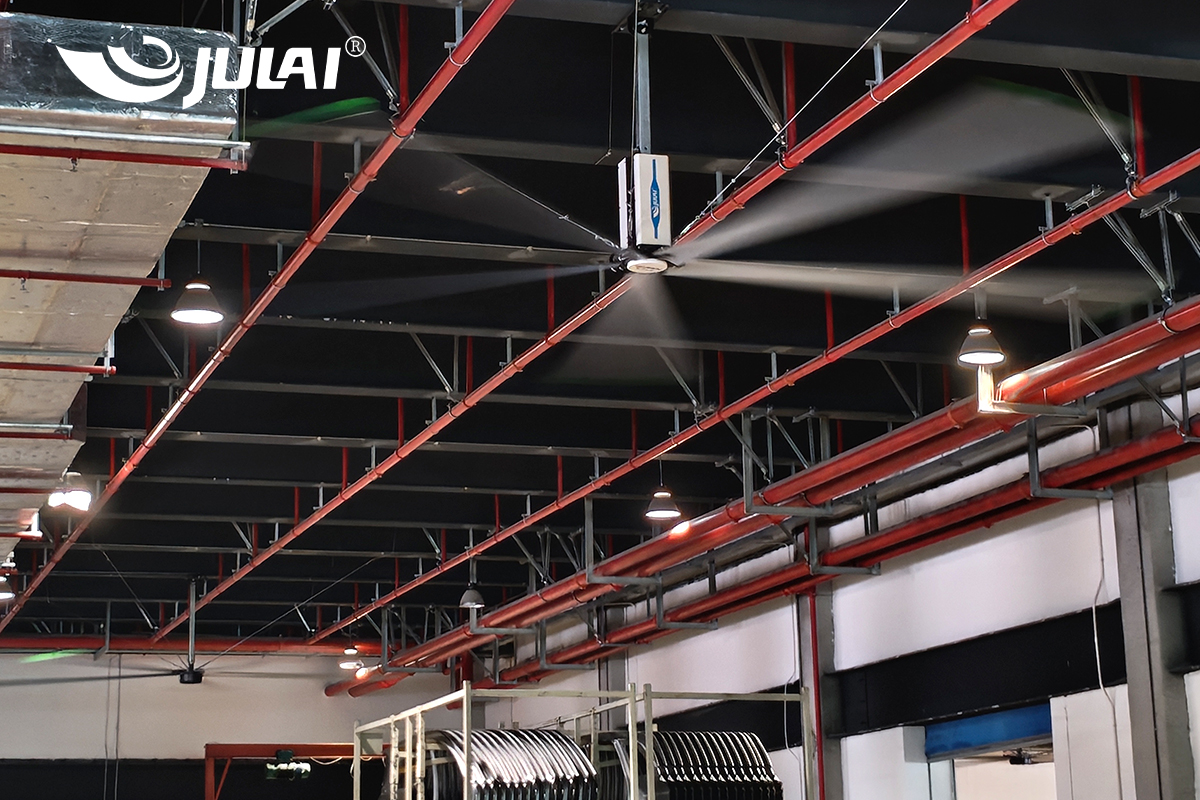
Fan installation must be coordinated with rack layout. Fans are preferably mounted above main aisles or active working zones, clear of rack tops, so airflow can travel along the full length of aisles. Mounting positions should also stay away from fire sprinklers, lighting fixtures and forklift traffic routes. Adequate clearance must be reserved between fan blades, building beams and pipelines.
For warehouses with zone-based management, zoned operation can be adopted according to work shifts and staff distribution. Fans in busy working zones run as priority, while units in unmanned storage areas can be slowed down or shut off. This balances full-space airflow coverage and energy consumption.
During daily operation, on-site teams can inspect airflow conditions between racks and in warehouse corners. Where dead airflow zones are detected, operating combinations and rotation speeds can be adjusted for improvement. Tall stacked goods alter airflow paths, so operation plans need flexible adjustments based on changing inventory stacking status.
By integrating site layout, installation planning and zoned operation strategies, large industrial ceiling fans continuously improve the indoor warehouse environment. They deliver better thermal comfort for on-site workers and reduce stuffiness caused by trapped air.